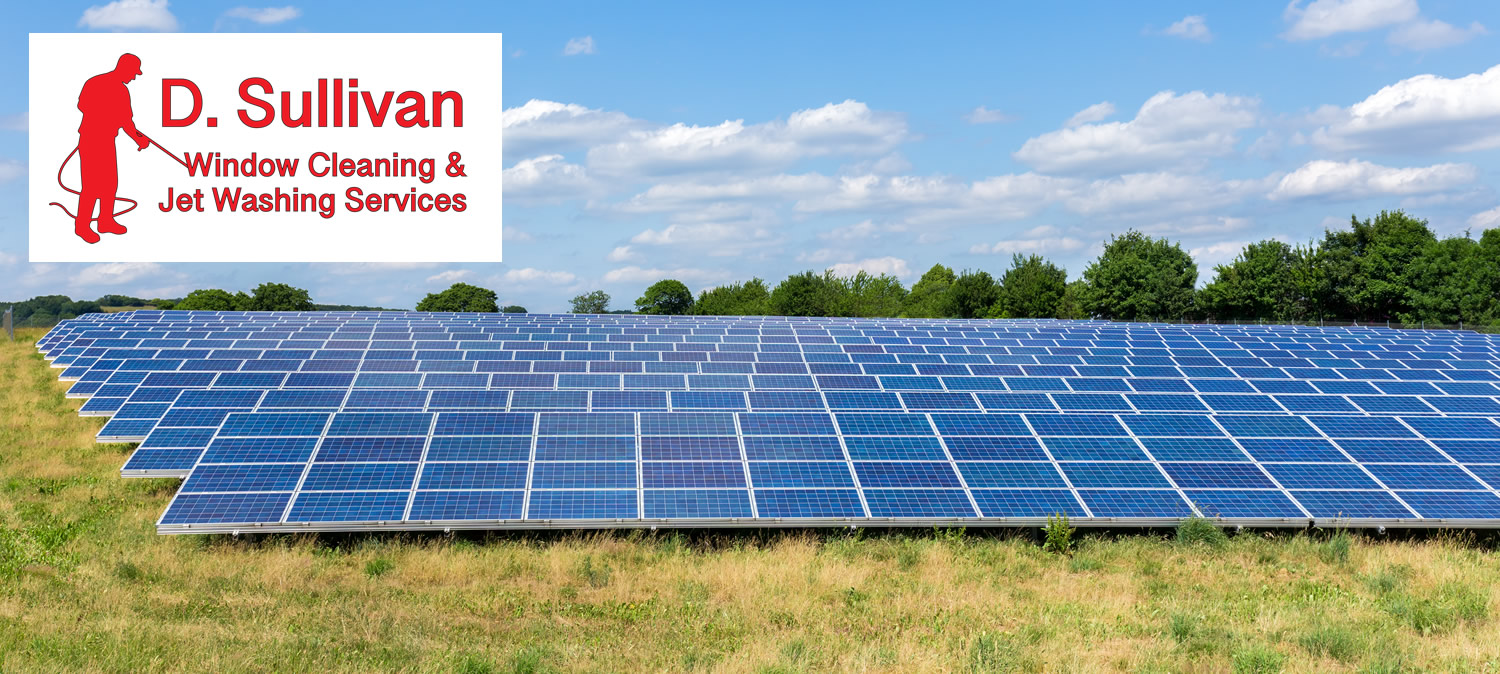
Clean solar panels are essential for consistent energy output and a strong return on your investment. For commercial sites, even a small drop in efficiency can translate into significant lost revenue over a year. Regular, professional cleaning helps maintain performance, protects warranties, and extends the life of your array.
This article explains why commercial solar panel cleaning matters, what affects panel performance, how professional cleaning works, and how to plan a sensible maintenance schedule for your site.
Why commercial solar panel cleaning matters
Dust, pollen, bird fouling, salt spray, traffic film, lichen, and general grime all build up on panels. In the UK, airborne debris can be significant near roads, industrial areas, agricultural land, and coastal locations. This layer of contamination reduces light transmission and prevents panels from operating at their best.
Typical impacts include:
- Reduced generation due to light obstruction
- Localised hot spots where deposits sit, which can stress cells
- Inverter inefficiencies when string outputs become imbalanced
- Underperforming arrays compared to yield forecasts and PPA assumptions
Manufacturers and insurers often recommend periodic cleaning as part of routine maintenance. Keeping evidence of professional cleaning helps support warranty terms and due diligence for asset owners.
What affects how quickly panels get dirty
Each site is different. The following factors influence cleaning frequency:
- Location and environment: Urban traffic, construction dust, or coastal salt increase build-up
- Panel tilt and layout: Low pitch and flat arrays collect more dirt and water spots
- Wildlife activity: Bird roosting and nesting nearby increases fouling
- Agriculture: Pollen, spores, and soil movement affect rural and edge-of-town sites
- Weather patterns: Dry spells allow dust to settle, light rain can bake on grime rather than wash it off
Panels do get some natural cleaning from heavy rain, but it is rarely enough to remove greasy films, mineral deposits, or baked-on debris.
The business case for cleaning
Even modest efficiency losses add up on commercial systems. For example:
- A 5 percent drop in output on a 250 kW system is a meaningful energy shortfall
- Lower generation can affect PPA revenue, savings forecasts, and payback periods
- Clean panels help stabilise performance data for performance ratios and warranty claims
Most sites see improved generation immediately after cleaning. The benefit varies with contamination level and season, but for busy commercial environments, the gains typically outweigh the cleaning cost when done on a sensible schedule.
Our cleaning approach
We clean commercial arrays with methods tailored to protect modules, frames, seals, cables, and inverters while restoring optical clarity.
Key elements of the process:
- Pure water cleaning: We use purified water that dries spot free and avoids mineral deposits on glass
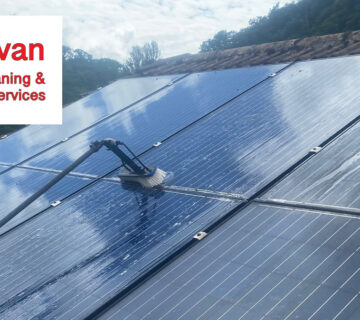
- Soft brush systems: Non-scratch, purpose-built brushes on water-fed poles or rotary heads where appropriate
- Access planning: Ground-based poles for lower arrays, approved MEWPs or platforms for higher or expansive rooftops
- Electrical safety: Visual checks for damaged cables or connectors and strict adherence to site lockout and isolation rules where required
- Zero harsh chemicals on glass: We avoid detergents that could leave residues or risk delamination
- Drainage control: Sensible water use, avoiding run-off into sensitive areas
We follow manufacturer guidance for cleaning, never using abrasive pads or high-pressure jets on panel surfaces. Where bird fouling is heavy, we pre-soak and lift deposits rather than drag them.
Health and safety
Commercial sites demand careful planning. We provide:
- Site-specific RAMS and permits coordination
- Trained, insured operatives with appropriate PPE
- Edge protection and fall-arrest systems as required
- MEWP-certified operators where lifts are used
- Clear signage and cordons to separate works from live operations
For logistics depots, retail parks, schools, and healthcare sites, we schedule works to minimise disruption and maintain safe access for staff and visitors.
Access and scheduling
Every site has unique access constraints. We survey the array to plan safe, efficient methods:
- Roof access points, walkway systems, and anchor positions
- Panel pitch, row spacing, and obstructions such as vents and plant
- Cable runs and inverter locations to avoid trip hazards
- On-site water supply or our own purified water systems
We offer out-of-hours cleaning to suit production schedules, retail trading hours, and educational timetables.
Frequency recommendations
Cleaning frequency depends on contamination risk:
- Low contamination: annually
- Moderate contamination or low panel pitch: every 6 to 12 months
- High contamination sites: quarterly or aligned to seasons
We can monitor output and adjust the schedule when data shows accelerated soiling. Some clients align cleaning with electrical inspections and thermal imaging for a single planned maintenance window.
Evidence and reporting
On completion, we can provide:
- Before and after photos
- Summary of methods and any observations
- Notes on visible defects such as cracked glass, loose framing, failed seals, shading issues, or damaged bird mesh
- Suggestions to mitigate recurring contamination, for example adding or repairing bird protection, trimming overhanging branches, or improving drainage on flat roofs
If we spot defects, we will flag them for your O&M provider or installer to address.
FAQ
Do you use chemicals to clean panels?
No. We rely on purified water and soft brushes. For stubborn residues around frames we may use approved, non-residue cleaners on frames only, not on the active glass surface.
Will cleaning void my warranty?
Cleaning in line with manufacturer guidance supports warranty compliance. We avoid abrasive methods and keep records of cleaning activity for your files.
Can you work on live sites without disruption
Yes. We plan routes, cordon areas, and schedule out of hours where needed. We coordinate with facilities teams to maintain safe access at all times.
Do you clean ground-mount arrays?
Yes. Ground-mount systems benefit from rotary brush systems and purified water, with attention to cable protection and ground conditions.
How do you price commercial cleaning?Can you remove lichen?
Pricing is based on array size, access, contamination level, height, and scheduling needs. We provide clear, itemised quotes after a short survey or from plans and photos.
Why choose a specialist team
- Experience with domestic arrays of all sizes and roof types
- Pure-water, PV-safe cleaning methods for spotless results
- Careful access planning to protect your roof, garden, and façade
- Respectful, tidy work with clear communication
- Optional photos and basic observations to support your maintenance records
- Simple, transparent pricing with free, no-obligation quotes
Clean panels perform better and look better. With a sensible cleaning schedule, you protect your investment and get the most from every hour of sunshine. If you would like a friendly, fast quote, tell us your address, array size or panel count, roof pitch, and any access notes. We will recommend a schedule and provide clear pricing to suit your home.